
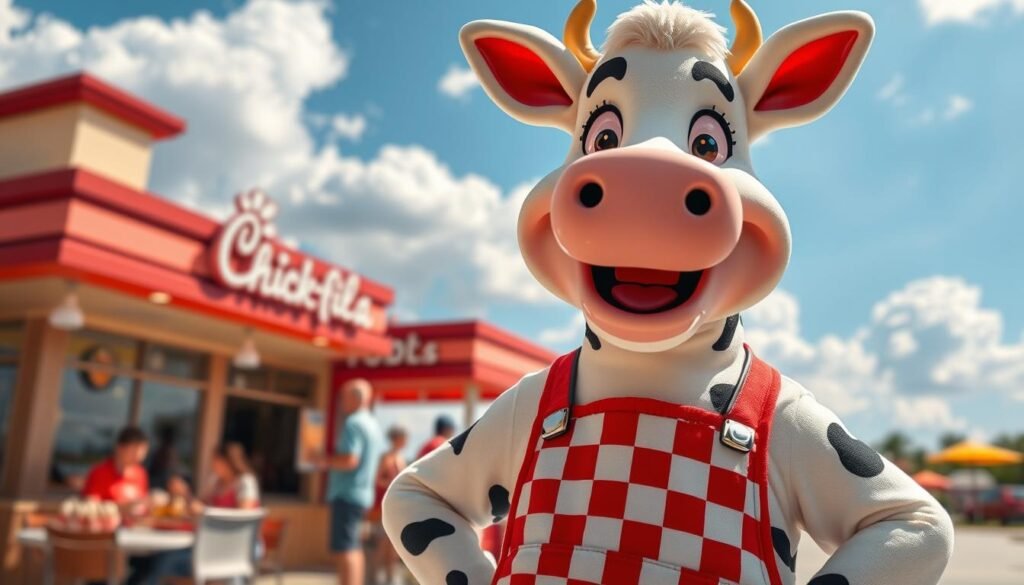
Have you ever wondered why most people picture cows when they think of this restaurant, even though that wasn’t the start? I did, and that question led me into a surprising part of the chain’s past. In this piece I trace the early role of Doodles, a chicken/rooster figure, and how it shifted into the famous billboard cows.
I explain why the chick fil a mascot served as more than a costume. It worked as a long-running branding device that helped the chain stand out in fast food. I preview two eras: the Doodles decades and the modern cow era.
You’ll get a clear, chronological view of the history and the marketing logic behind those choices. I show how these creative moves boosted customer recall and kept brand consistency. I also note one quiet detail: Doodles still appears inside the logo’s first “C”.
Key Takeaways
- I show that the early mascot era featured Doodles before the cows dominated.
- The mascot choices shaped marketing and customer memory over time.
- The shift from Doodles to cows redefined the chain’s public image.
- Brand consistency helped the restaurant grow in the fast food market.
- Small logo details preserve the chain’s original identity.
What the Chick-fil-A mascot is and why it matters in fast food marketing
To begin, I describe how a single figure can carry a brand‘s voice in busy settings. A mascot here is more than costume or character; it is a quick signal that tells customers what the restaurant promises.
I define the role in practical terms: the character becomes shorthand for product focus, tone, and trust. In crowded spaces—malls, airports, or highway stops—this shorthand helps people decide fast.
How a mascot becomes part of brand identity
Characters work through repetition and simple shapes. Consistent visuals and a steady slogan boost recall over decades, turning a campaign into a lasting cue.
Why these mascots stand out among peers
- Positioning: The figure signals chicken-focused food without long explanations.
- Differentiation: Humor and a clear anti-beef twist set the company apart.
- Longevity: Using characters over time creates a steady marketing advantage for the whole chain.
The original mascot before the cows: Doodles the rooster (often marketed as a chicken)
My research shows that Doodles began not in an ad agency but in an employee naming contest. In 1972 the company held a “Name the Chicken” event and bought a costume for store appearances. The name doodles stuck and the suit became the original mascot.
How the name contest created a living brand figure
The contest turned a simple prop into a public-facing character. Staff picked the name and the costume started appearing at openings and local events. That grassroots start helped customers connect with the brand in real places.
Costume changes and why the design evolved
Technically Doodles was a rooster—the red comb gave that away—but marketing often called him a chicken so the image would read clearly to families. Early outfits looked like people in suits. By the 1980s Doodles wore an apron and a red-checkered neckerchief.
In the mid-1990s the look shifted to a sporty jersey. Those updates tracked the brand’s growth and its focus on kids and families over the years.
Where Doodles still shows up
Today the character survives subtly in the logo. If you look closely, the chicken head forms part of the first “C.” It keeps a piece of the chain’s history visible without putting the suit back in front of customers.
From malls to nationwide recognition: where Doodles showed up in restaurants and merch
Evidence shows Doodles lived beyond print and logos. I found him greeting families inside malls when the chain focused on food courts. That live presence made the character a real meeting point for kids and parents.
Meet-and-greets and kid-focused branding in the 1970s-1990s
I watched how meet-and-greets became a practical tactic for the restaurant to drive impulse visits.
At openings, Doodles handed out stickers and encouraged kids to pick the place. Those moments made the spot feel like a destination and helped convert passersby into loyal customers.
Merchandise moments: stickers, plush, caps, pins, and “heritage” throwbacks
The merch list reads like a timeline: stickers, plush dolls, baseball caps, and enamel pins circulated for years.
That gear extended the brand outside the restaurant and kept children connected over decades. Modern heritage items — a crewneck sweatshirt and wool hat — revive the old slogan, “the best thing that ever happened to chicken,” without replacing the cows.
chick fil a mascot timeline: from Doodles to the famous cows
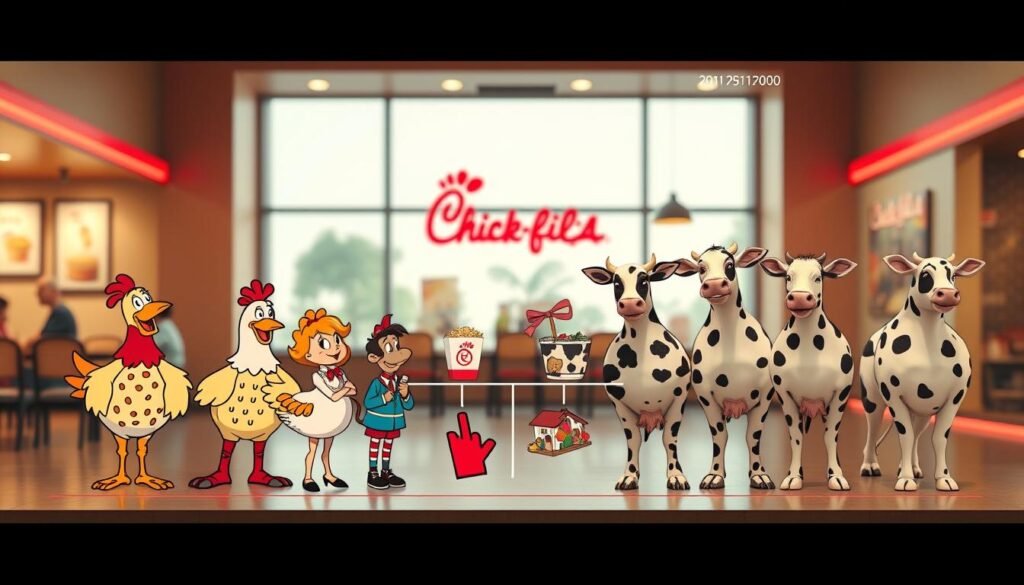
I map a tight, date-driven timeline that traces how Doodles gave way to the now-iconic cows.
Mid-1990s redesign:
In the mid-1990s Doodles received a sporty red-and-yellow jersey. The update matched casual trends and kept the character kid-friendly. This change read as an effort to modernize during busy growth years.
The Atlanta billboard that shifted the campaign
In 1995 a billboard in Atlanta created with the richards group debuted. That billboard atlanta moment set the creative tone and helped the cows gain quick public notice. The billboard atlanta run was the public debut 1995 for the new idea.
From billboard to in-person cows
The cow concept moved fast. By 1997 the first cow costume appeared in stores, and by 1998 Doodles was officially retired. Between 1998 and 1999 the whole chain rolled out cows made for live events.
Why the pivot mattered
Strategically, the switch preserved heritage while boosting recall. The cows made first on billboards, then onstage and in ads, keeping the company visible through years of expansion.
The “Eat Mor Chikin” campaign and the rise of the cows
I trace how one landmark billboard in Atlanta turned a small idea into a long-running campaign. Two painted cows urged passersby to eat mor chikin, and the humor was immediate: cows convincing people to eat chicken instead of beef.
Why cows telling people to eat chicken worked
The twist was unexpected and funny. Cows pleading for less beef created surprise and made the message stick.
How the Richards Group launched the billboard idea
In 1995 the Richards Group produced the first roadside billboard. The simple, misspelled slogan read fast from the highway and was easy to copy across media.
How “Eat Mor Chikin” became the brand’s signature line
The phrase moved from outdoor ads into TV, radio, and merchandise. Over decades the cows and the slogan tied together the food chain‘s identity and made the campaign a defining piece of its marketing playbook.
- Memorable: Intentional misspelling made the slogan repeatable.
- Competitive: It positioned the chicken restaurant against burgers without naming rivals.
- Enduring: The cows became perennial spokes-figures for the brand.
Beyond billboards: commercials, real cows, and the names behind the campaign
The billboard stunt did not stop at highways; it grew into TV commercials that reached many more customers. I show how the team moved the idea from painted signs to filmed spots and why that mattered for the campaign’s reach.
Real-life cows in 1997 TV spots and where they came from
In 1997 the first television commercials used real animals sourced from Phil’s Animal Rentals in Piru, California. That production fact added authenticity and kept onlookers curious about the behind-the-scenes work.
The named stars of the commercials: Freedom, Freckles, Molly, and Cat
Chick‑fil‑A later identified the cow-stars by name: Freedom, Freckles, Molly, and Cat, with Cat appearing in many ads. Naming these figures helped build memory over years and made the animals feel like recurring cast members.
How the ads evolved into “acting” roles and dressed-up concepts
Early spots showed simple cows being cows. Over time the commercials shifted to staged scenes where animals wore clothes or played roles. This change refreshed the campaign while keeping the core characters familiar.
“The move to filmed spots let the campaign live beyond the highway and into living rooms.”
- Reach: commercials found customers who never saw the billboards.
- Production: the cows made first for TV added credibility on set.
- Media: widely circulated photos and Getty Images coverage extended the campaign’s lifespan.
When mascot marketing becomes part of pop culture and legal history
When characters grow into cultural shorthand, they often attract both awards and lawsuits. I trace how the cows moved from roadside jokes to recognized marketing assets and legal disputes.
Madison Avenue Advertising Walk of Fame recognition (2007)
In 2007 the cows earned entry into the Madison Avenue Advertising Walk of Fame. That honor showed how a simple visual device can become part of advertising history.
The induction marked the campaign’s place in pop culture and validated the campaign as more than a fleeting stunt.
The Burger King “Chicken Run” dispute and why Chick-fil-A sued
In summer 2000 I found that the fast food chain sued Burger King over a promotional tie-in called “Chicken Run.”
Chick‑fil‑A alleged the effort encroached on its Eat Mor Chikin slogan and cow imagery. The case ended quickly after an agreement approved by a federal judge, and Burger King halted the campaign.
The “Eat More Kale” case and what it shows about slogan ownership
Not every challenge succeeds. Chick‑fil‑A later contested a different slogan — “Eat More Kale” — but lost that battle.
Bo Muller‑Moore secured the trademark, illustrating limits to owning short phrases. I see this as a reminder: slogan protection can be strong, but it is not absolute.
“When branding becomes memorable, it becomes enforceable — and litigable.”
- Pop-culture reach: The cows became cultural symbols, not just ads.
- Legal stakes: Brands defend visual and verbal assets when they drive sales.
- Strategic lesson: For a restaurant or fast food chain, a distinct message about beef and chicken can be both an asset and a legal flashpoint.
Modern updates: animated versions, short films, and “Newstalgia” nods to the past
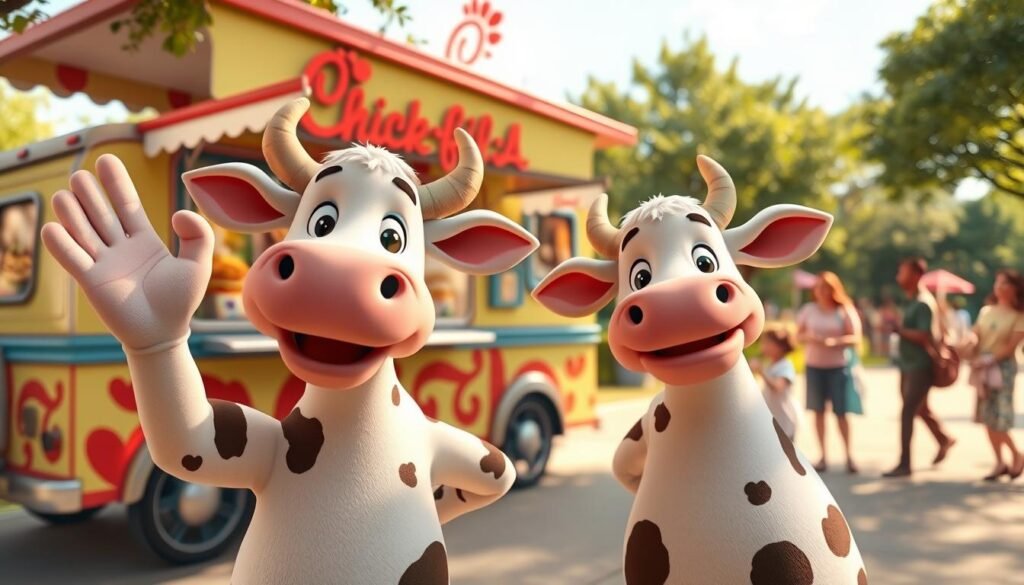
Digital platforms pushed the company to rethink how its cows speak to new audiences. In 2022 the brand launched animated versions and downloadable GIFs to meet users where they scroll.
These animated versions made the cows shareable in messages and on social media. Motion gave the characters quick personality without long ads. That helped the campaign stay relevant across feeds and stories.
Short films expand character storytelling
In 2023 the team released short films titled “Code Moo” and “Tha Billbord.” Those short films let the cows play longer scenes and build jokes that a single billboard could not hold.
Newstalgia and the return of classic elements
The Newstalgia collectibles brought vintage design back into stores. One cup featured Doodles, the original mascot, and reminded fans of earlier decades.
Keeping Doodles visible in the logo ties past to present. The brand preserves the old phrase while using new formats. That mix helps the chicken restaurant stay top-of-mind when someone chooses a chicken sandwich.
- Reach: animated GIFs grow social shareability.
- Depth: short films add narrative to the cows.
- Continuity: Newstalgia gear and logo cues keep heritage in play.
Conclusion
In summary, the story moves from costume meet-and-greets to a simple billboard idea that grew into a long-running campaign.
I show that Doodles retired in 1998 and the chain-wide transition to cows completed across 1998–1999, after the 1995 Atlanta billboard sparked the shift.
The result: the cows became the public face of the fast food chain because the idea was funny, repeatable, and fit billboards, commercials, and merch.
Yet the restaurant kept Doodles in heritage touches and logo cues, letting mascots evolve while preserving history.
I conclude that any restaurant or fast food chain wins when mascots stay consistent, adapt to new media, and keep the product—chicken and food—clear in the slogan and marketing.