

Want to know how I got warm, bakery-style treats that taste almost like the in-store version? I set out to recreate a famous menu item by testing ingredient tweaks and shaping tricks until the texture hit just right.
I used listed components as a guide and then adjusted for depth with dark brown sugar, oats, and a mix of chocolate chunks plus milk chips. I stacked two scoops of dough to get tall, thick rounds that bake up soft in the center with slightly crisp edges.
This is a copycat post, not affiliated with the brand. I share what worked in my kitchen: clear steps, smart swaps, and why each step matters. A single homemade batch made about twenty treats and shined best when served warm.
Read on to learn ingredients, tools, shaping, baking time, and simple storage tips so your warm, gooey treats reheat like they did fresh from the counter.
Key Takeaways
- My tested copycat approach yields thick, bakery-style cookies at home.
- Stacking two dough scoops creates a tall, soft center and crisp edge.
- Dark brown sugar, oats, and mixed chocolate pieces deepen flavor.
- A batch of about twenty is budget-friendly versus buying a pack.
- Follow shaping and bake timing for best reheating results.
What Makes Chick-fil-A Chocolate Chip Cookies So Good (and What I’m Copying)
I started from memory and worked backward to nail texture and flavor. My focus was the contrast: tall, chewy centers with edges that bake up just crisp. That contrast gives each bite interest instead of one flat texture.
How I control that:
- I mound two scoops of dough to limit spread and keep height.
- I fold in oats so every bite has subtle chew without tasting like an oatmeal treat.
- I use both semisweet chunks and milk chips for a layered chocolate effect.
Thick, soft centers with crisp edges
Height matters: taller dough means less lateral spread and a soft center. I pull the trays when edges brown lightly so the middle stays tender.
Chocolate chunks, milk chips, and oats in every bite
The mix gives depth. Large chocolate chunk pieces melt into pockets of intense flavor while smaller milk chips add sweet pockets throughout.
Why serving them warm changes everything
Heat softens both large and small pieces, making centers taste richer. A quick reheat for a few seconds recreates that fresh-baked melt.
My chick fil a chocolate chip cookie recipe Ingredient List (and Why Each One Matters)
I’ll walk through every ingredient I measured and what role it plays in creating tall, tender rounds.
- ½ cup butter, ½ cup shortening
- 1½ cups packed dark brown sugar, ½ cup granulated sugar
- 2 eggs, 1 Tbsp vanilla
- 2¾ cups all-purpose flour, 1 tsp baking soda, ½ tsp baking powder, ½ tsp salt
- 1 cup oats, ~12 oz semisweet chocolate chunks, ½ cup milk chocolate chips
Butter + shortening for that signature texture
Butter gives flavor; shortening keeps dough tall and tender. I used both to balance taste and structure. Substitutes like vegetable oil or coconut oil work, but they change spread and mouthfeel.
Brown sugar vs light brown sugar
Dark brown sugar adds moisture and molasses depth. Light brown is fine in a pinch, but it may make cookies spread a touch more.
Flour, leaveners, oats, and chocolate
All-purpose flour is my default; bread flour adds chew. Baking soda and baking powder control lift and spread so the center stays soft. I blend quick and old-fashioned oats to cut spread. Semisweet chocolate chunks create bold pockets while milk chocolate chips add creamy sweet notes.
“Eggs and vanilla finish the mix, adding richness and that classic cookie dough flavor.”
Tools I Use for Bakery-Style Chocolate Chip Cookies
Using the right equipment helped me turn measured dough into tall, even bakes every time. Tools matter because consistent creaming and portion control are what make homemade treats look and bake like they came from a bakery.
Stand mixer or hand mixer for creaming
Stand mixer or hand mixer for creaming
I prefer a stand mixer for creaming butter, shortening, and sugar. It aerates faster and gives a reliably fluffy base.
A hand mixer works well too. Look for pale, light ribbons in the mix — that’s what I call “fluffy” and it means air is trapped for lift.
Cookie scoop and portioning
Cookie scoop for consistent dough portions
I use a medium scoop (about 2 tablespoons). Same-size portions mean the same bake time and the same thickness across the batch.
Baking surface and release
Parchment paper or silicone baking mats for easy release
Light-colored, heavy cookie sheets cut down on over-browning at 350°F. I line them with parchment or a silicone mat. Silicone lasts; parchment is quick and disposable.
- One bowl for wet, one for dry: this prevents overmixing when you combine ingredients.
- Why it matters: the right setup keeps chips suspended and stops thin, greasy spread so the cookies bake tall and soft in the center.
“Good gear and consistent portioning changed my results from inconsistent rounds to bakery-style treats every batch.”
How I Prep for the Best Cookie Dough
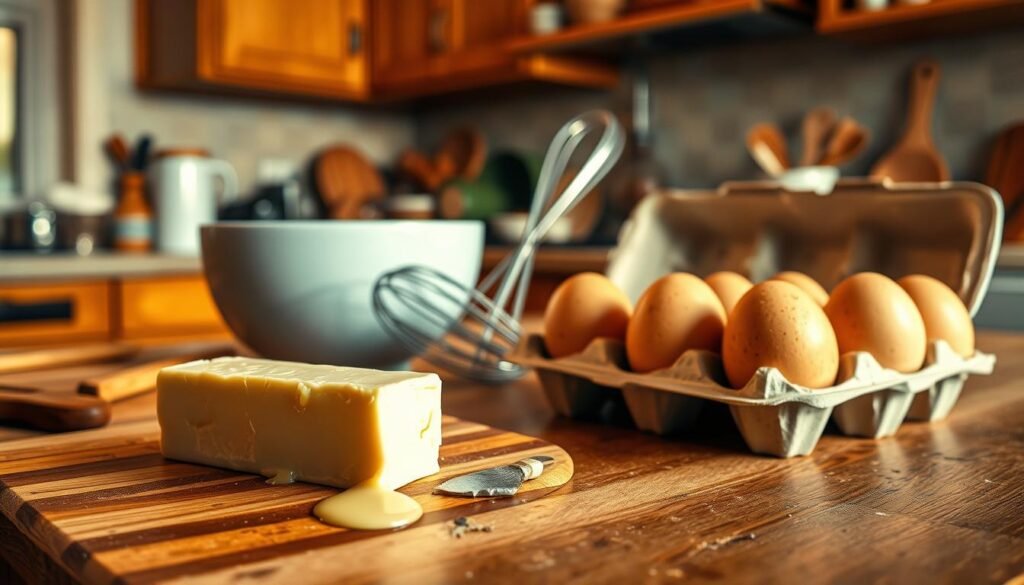
Good dough starts with a calm prep routine and predictable temperatures.
Bring ingredients to room temp. I let butter soften until it still held shape but yielded to gentle pressure. I set eggs out so they mixed in smoothly without shocking the batter.
Room temperature in my kitchen meant about 65–70°F. That small step made creaming faster and improved texture in the cookie dough.
Preheat oven 350°F and get pans ready before you start mixing. I always preheat oven twice: once as I measure, and again before the first tray goes in. Oven accuracy affects spread, browning, and center doneness.
Line sheets, arrange a cooling rack, and plan for 4–6 large cookies per sheet so heat can circulate and bake evenly. I also whisk dry ingredients separately to avoid overworking the dough.
As a time saver, I portion chocolate chunks, chips, and oats before folding them in. A few minutes of setup up front paid off with consistent, bakery-style results.
“Prep is the quiet step that determines how each batch finishes.”
Step-by-Step: How I Make the Cookie Dough
I follow a clear sequence so texture, not just flavor, comes out right. Start by prepping pans and measuring every cup of dry and wet ingredient. That small setup saves time and keeps the dough consistent.
Cream butter, shortening, brown sugar, and granulated sugar until fluffy
I beat the butter and shortening with brown sugar and sugar for about 3–4 minutes, until the mix looks lighter and holds air. This aeration helps the rounds bake tall instead of flat.
Beat in eggs and vanilla
Next I add eggs and vanilla, one at a time, and mix until smooth. The batter becomes cohesive and glossy—no streaks—before the dry ingredients go in.
Whisk dry ingredients in a separate bowl, then combine without overmixing
In a separate bowl I whisk flour, baking soda, baking powder, and salt so leaveners are even. I fold the dry ingredients into the wet in two additions and stop when no white streaks remain.
Fold in oats, chocolate chunks, and chocolate chips just until distributed
Finally, I stir in oats and then the chocolate chunks and chocolate chips. I mix until the add-ins are evenly scattered. The dough should be thick and scoopable, ready for the two-scoop stacking method.
Pro tip: look for a fluffy creamed base, no dry flour streaks, and evenly mixed add-ins — those cues matter more than exact minutes.
How I Scoop and Shape These Thick Copycat Chip Cookies
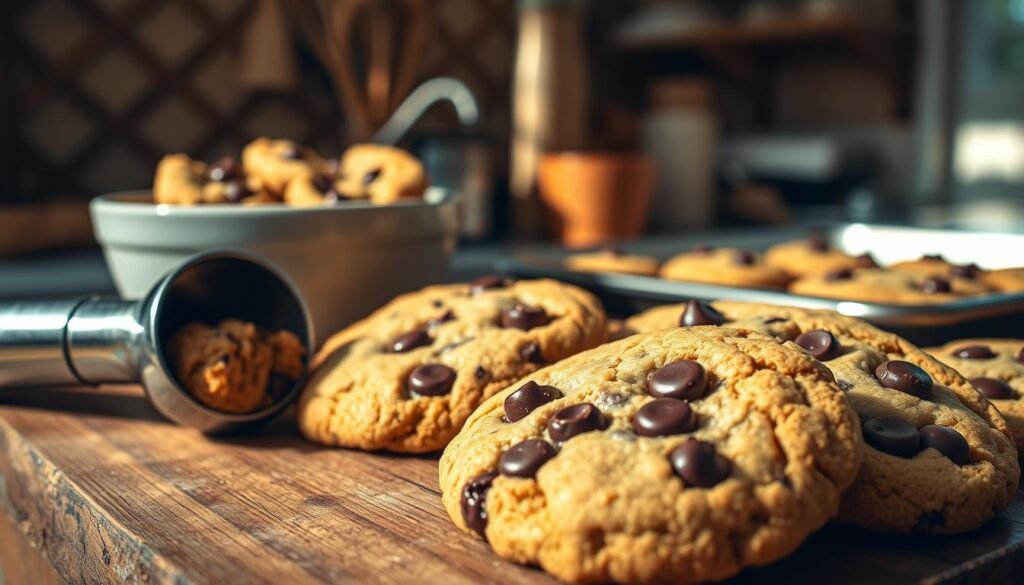
Shaping the dough was the single step that changed my finished texture the most. I used a medium (2 Tbsp) scoop and stacked two mounds for each portion. That stack equals roughly 1/4 cup of dough, which kept rounds tall without weighing out each ball.
The two-scoop stack method
Stack one ball on top of another and do not press them flat. The height limits lateral spread so the center stays soft while edges crisp. This is the key to a true copycat chip cookie look.
How many per sheet
I bake only 4–6 per tray on my cookie sheets. That spacing lets heat circulate and prevents merging. If you overcrowd, expect uneven browning, thin edges, and centers that need extra minutes to set.
Quick post-bake rounding trick
Right out of the oven, I place a large biscuit cutter over the hot round and gently nudge it to round the edge. Sometimes the top scoop slides and makes an oval; that’s cosmetic and still delicious.
“Two scoops, careful spacing, and fast shaping give tall, craggy cookies that match the copycat goal.”
Baking Time and Doneness: Getting Soft, Chewy Centers
I learned to trust visual cues more than the clock when aiming for soft, chewy centers. In my tests I baked at 350°F and used a short window of minutes to guide pulls. That range kept the middle tender while edges gained color.
Why I pull them at 11–13 minutes
I usually set the timer for 11–13 minutes. I watch the edges, not the center. When rims are lightly browned and the center looks just set, I slide the tray out.
Resting on the baking sheet before the wire rack
I let the warm rounds rest on the hot sheet for about 3 minutes so carryover heat finishes the middle. This short pause stabilizes the edges and keeps the interior soft.
- Target doneness: lightly browned edges, centers still glossy but firming.
- Why not bake longer: overbaking makes them dry and loses that tender bite.
- Quick fixes: if they spread too much, check oven temp and dough warmth; if too tall or dry, cut time by a minute.
“Pulling at the visual cue saves minutes and preserves that warm, melty center you want when serving.”
Flavor and Texture Variations I’ve Tested
I experimented with fats, sweeteners, and mix-ins to tune chew and crunch. These small swaps changed how the rounds browned, how the center held up, and how that melt felt against the add-ins.
All-butter vs butter-and-shortening
I tried an all-butter batch and one with both butter and shortening. All-butter tasted richer and more buttery. The butter-and-shortening mix stayed taller and softer in the center.
Swapping shortening for vegetable or coconut oil
When I replaced shortening with vegetable oil or coconut oil, the dough spread a bit more. The bite felt slightly different, but it stayed tasty. I watched bake time closely so centers didn’t overcook.
Nut add-ins and chew boosters
I added ½ cup chopped walnuts for crunch. Nuts gave great texture but reduced the pure soft feel.
To boost chew, I stirred in about 1 Tbsp molasses and 2 Tbsp Lyle’s Golden Syrup. That tweak added caramel depth and a pleasantly sticky interior without a strong honey taste.
- Brown sugar choice: light brown spreads less; dark brown sugar adds moisture and depth.
- Chocolate balance: more milk chocolate makes things sweeter; extra dark or semisweet chunks deepen the hit from the chocolate chunks.
- Flour tweak: swapping some all-purpose for bread flour raises chew and thickness.
Optional tip: chilling the dough helps reduce spread and improves chew if you have the time. These small changes let me tune each batch to match how I like my copycat chocolate chip cookies.
Storage, Freezing, and Reheating for Warm Cookies Anytime
I found simple steps that kept my baked rounds fresh and gooey for days. Proper packing and a short reheating trick recreated that warm, bakery feel in minutes.
How I store them: I let each cookie cool fully, then stack in a single layer inside an airtight container so they don’t dry out. I tuck a small piece of parchment between layers when I need to double up.
In ideal pantry conditions my cookies stayed soft for about a week, though they rarely lasted that long in my kitchen.
Freezing plan: For make-ahead ease I freeze baked cookies flat on a tray until solid, then move them to a sealed bag or airtight container. I also freeze pre-scooped dough balls so I can bake a few at a time without waste.
Quick reheating method
I microwave one cookie for about 5 seconds, then check and add a couple more seconds only if needed. The chocolate chips and larger chunks soften fast, bringing back gooey pockets.
“Warm-and-soft, not overheated—overcooking makes them tough.”
Bottom line: this storage and reheat plan let me enjoy the main advantage of the recipe anytime—fresh warm bites days after baking.
Conclusion
My final tests showed that small, deliberate changes yield the biggest difference in texture.
Keep the balance of dark brown sugar and granulated sugar, keep dough thick, and bake at 350°F for soft centers and crisp edges.
Use flour for structure, oats for bite, and both baking soda and baking powder to control lift and spread. Add vanilla for classic flavor.
For mix-ins, semisweet chocolate chunks create bold pockets while milk chocolate adds sweet, creamy notes—this layered approach deepens each bite.
The two-scoop stacking method and proper spacing were the single bakery trick that changed my results most. Serve warm; a few seconds in the microwave brings back the melt.
Save the method, try one variation at a time (molasses, nuts, or fat swaps), and you’ll dial in your perfect batch.