
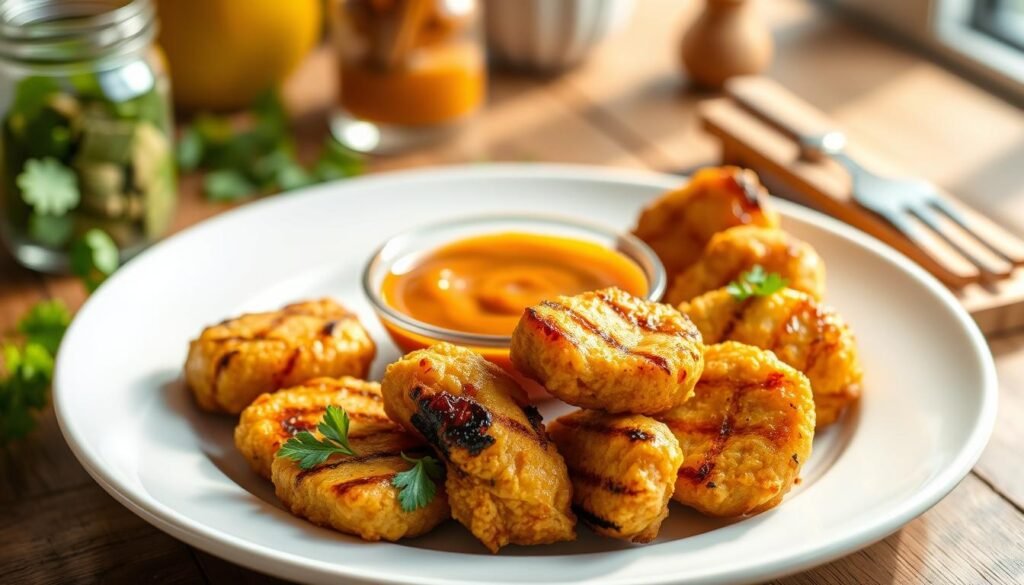
Want to make the same tender, smoky pieces you crave without the drive-thru? I wrote this copycat chick fil formula so you can enjoy that familiar flavor at home, even when the restaurant is closed.
I keep the method simple for weeknights: quick prep, everyday ingredients, and a choice of skillet or grill. The goal is juicy chicken with a light, seasoned crust that tastes like the real deal.
What sets these apart from fried bites is the brine, the high-heat sear, and a tiny sweet twist that mimics the signature finish. Later I reveal two small secrets—pickle juice in the brine and a dusting of powdered sugar—to nail the profile.
Ahead you’ll find why I use each step, the full ingredient list, how long to soak, step-by-step cooking, sauces to pair, and storage tips for leftovers.
Key Takeaways
- Simple at-home copycat: a fast method that fits weeknights.
- Brining with pickle juice boosts tenderness and flavor.
- High heat and a light crust give that restaurant-like texture.
- Two small tricks recreate the classic taste without frying.
- Works in a skillet or on an outdoor grill and stores well for meals.
Why I Make These Copycat Chick-fil-A Grilled Nuggets at Home
When the restaurant is closed on Sunday, I want fast, familiar bites without extra fuss. Having this recipe ready saves time and ends that weekend craving in minutes.
I aim for something lighter. These bites give me high protein without the grease. I often serve them with a side salad or fruit cup for a balanced meal.
I chase a specific flavor: lightly smoky, well-seasoned chicken with tender insides and browned edges. No special gear is needed—just a short brine, a simple rub, and quick cook minutes on the stovetop or grill.
- Practical: quick prep and repeatable results when I cut the chicken evenly.
- Flavor-focused: a brief brine plus a balanced rub creates that fast-food profile before you add your favorite sauce.
- Versatile: perfect for weeknight dinners, meal prep, or tossing over greens for extra protein.
What You Need for Chick-fil-A-Style Grilled Nuggets
I gather the ingredients so shopping is fast and my prep stays under 20 minutes. Below I list the core items and smart swaps that make the process simple and repeatable.
Chicken choice
I use boneless skinless chicken breasts for even, classic bites. Breasts give me consistent size and texture when I cut them into pieces.
For less cutting, chicken tenderloins work great since they are thinner and cook faster.
Brine basics
The brine is just dill pickle juice and milk. The pickle juice adds acidity and salt, while the milk helps tenderize the chicken so it stays juicy.
Seasonings & sugar
My dry mix is garlic powder, paprika, salt, pepper, and seasoned salt. I add a pinch of powdered sugar to balance savory notes and help form a light crust.
Optional swaps & tools
- Milk swap: plain unsweetened almond milk works if you need non-dairy.
- Oil options: olive, sunflower, soybean, or peanut oil for high-heat searing.
- Tools: a bowl or cup for the brine, a zip-top bag or bowl to marinate, and a skillet or grill to cook.
“If someone dislikes strong pickle flavor, I shorten the brine time or reduce the pickle juice and still get tender chicken.”
Does Chick-fil-A Soak Their Chicken in Pickle Juice?
Folks often wonder if that familiar tang comes from soaking the protein in pickle juice. I can’t say the company confirms it, but employee claims and lots of copycat methods point to pickle brining as the likely source of that tender, slightly tangy finish.
Why pickle brining is so common
Vinegar, salt, and spices in dill pickle juice help break down muscle fibers. That makes the chicken more tender and adds a mild tang that many people associate with the chain’s flavor.
How I keep the flavor subtle
I use measured amounts, limit the brine time, and always pat the chicken dry before seasoning. Shorter soak time preserves texture without turning the pieces overtly sour.
- Realistic expectation: if I’m looking for it, I might notice a hint of pickle, but it never tastes like whole pickles.
- Control lever: time is the easiest way to dial back the tang while keeping tenderness.
- Goal: match the overall profile of grilled chicken, not make a sour bite.
“The brine is about texture and balance, not a pickle-forward punch.”
How to Brine Chicken Nuggets with Dill Pickle Juice and Milk
A quick soak in the right mix turns plain pieces into juicy, well-seasoned chicken. I pour dill pickle juice straight from a jar of dill pickles because it’s convenient and consistent.
My basic brine is simple: equal parts dill pickle juice and milk in a bowl or zip-top bag so every piece stays coated. I use about one cup dill pickle to a matching cup of milk for small batches.
I usually marinate for about 30 minutes. That time keeps the meat tender without pushing salt too far. If I need more hold time, I watch the brand sodium and adjust.
- Brand sodium examples (mg/oz): Heinz dill chips 60, Wickles 150, Vlasic spears 220, Claussen spears 330.
- If the jar tastes very salty, I shorten the brine minutes, cut the cup dill amount, or add more milk.
When done, I remove the chicken pieces and pat dry on paper towels. Pat dry twice if needed so the rub clings and the surface browns instead of steaming. That final step is how I get tender, lightly crisped nuggets every time.
chick fil a grilled nuggets recipe: Step-by-Step Cooking Instructions
My goal is even cooking, so I start with uniform pieces and a precise rub. Below I break the process into clear steps so the pan or grill finishes tender, not dry.
Cutting for consistent cook time
I cut the chicken into even bite-size pieces so each piece cooks at the same rate. Consistent size prevents dry edges and underdone centers.
Mixing the dry rub
In a small bowl I combine powdered sugar with garlic powder, paprika, salt, and pepper. The powder and sugar help form a light crust and balance flavor.
Stovetop skillet method
I heat a pan over medium-high heat and add a drizzle of oil. I spread the pieces in a single layer and toss often so they brown evenly.
- Cook time: about 8–10 minutes, watching color more than the clock.
- If the pan scorches, I lower the heat; if crowded, I cook in batches.
Grill option
I preheat the grill to high, roughly 400°F, and cook about 3 minutes per side until done.
Doneness and serving
I always check the internal temperature and pull the pieces at 165°F. I plate immediately and serve with a sauce so the meal tastes complete.
Flavor Secrets: Powdered Sugar, Pickle Brine, and Seasoning Balance
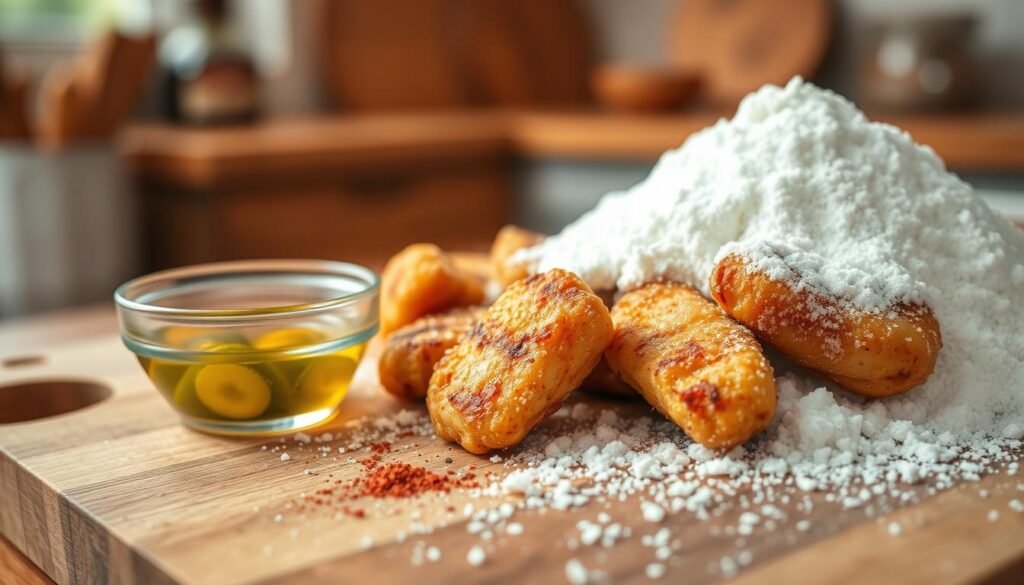
A little powdered sugar and a short brine change the whole flavor profile of my bites. Powdered sugar behaves differently than granulated sugar because it often contains cornstarch. That tiny starch helps form a light crust without turning sticky.
Why powdered sugar helps texture
Powder works into the dry rub and melts quickly on contact with high heat. The cornstarch in the powder promotes a subtle, restaurant-style exterior.
How the brine keeps chicken juicy
My brine mixes pickle juice with milk. The acid and salt from the pickle juice break down fibers so the meat stays tender even with intense heat.
Tweaking seasoning to taste
I balance salt and seasoned salt so the bites taste savory without being over-salty. If I want more bite, I add garlic; for color and warmth, I increase paprika.
- Tip: If pieces feel too rich from added fat, reduce oil or cut size and keep the same rub ratios.
- Repeatable: Once I lock a balance, I use the same powder and spice amounts for consistent grilled nuggets every time.
“Small adjustments to sugar, salt, and spice make the biggest difference in texture and flavor.”
Dipping Sauces to Serve with Grilled Nuggets
A solid dipping sauce can turn simple bites into something memorable. I always pair the pan with at least two sauces so everyone finds a favorite. The right sauce is half the fast-food feel and doubles the ways I enjoy the meal.
Copycat honey mustard
My go-to honey mustard blends mayonnaise for cream, Dijon and yellow mustard for tang, honey for sweetness, a splash of apple cider vinegar, and a pinch of salt. I whisk until smooth.
Chilling the mix for 20–30 minutes firms the texture and helps the flavors meld so it tastes like a store-style dipping sauce.
Other favorites
Beyond honey mustard, I line up BBQ, ranch, Polynesian, and the classic Chick-fil-A sauce for variety. For heat, I stir in hot honey or a dash of hot sauce. For a sharper bite, I increase Dijon.
- Mix-and-match: make two jars and rotate flavors during the week.
- Meal prep tip: sauces keep well in the fridge for 5–7 days.
- Serving: offer small bowls for easy dipping with nuggets or chicken nuggets.
“Sauce choices let one batch of chicken feed different cravings.”
Storage, Reheating, and Meal Prep Tips
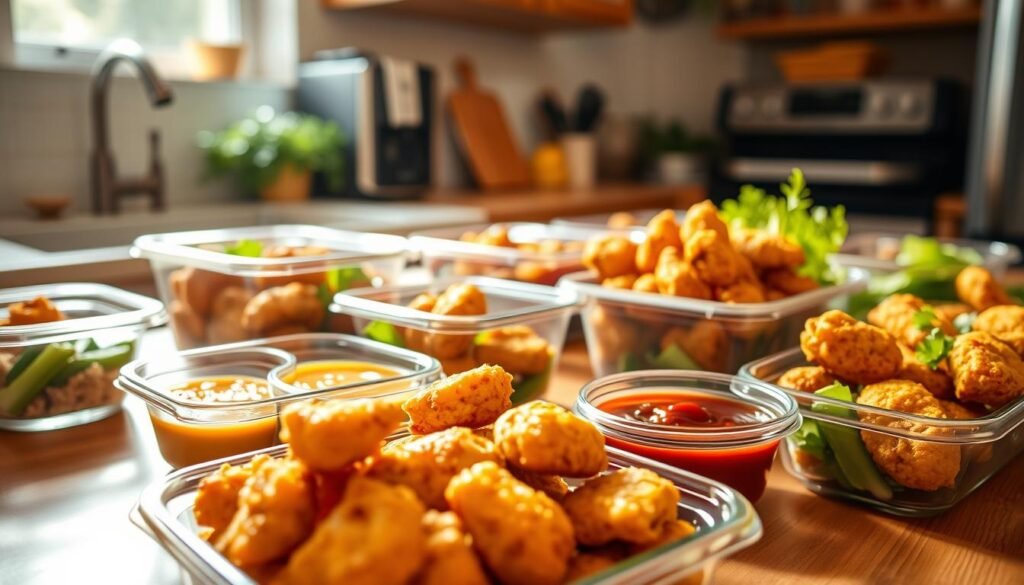
I treat cooling and packing like part of the cook — it protects flavor and texture. After cooking, I let the pieces rest briefly then move them to a container so they cool evenly.
How I store leftovers
I cool the nuggets on a rack for a few minutes, then transfer them to an airtight container. Storing this way keeps moisture in and prevents drying.
I plan to eat them within 3–5 days in the refrigerator. That timeline makes this an easy weekly meal prep protein.
Best ways to reheat
The microwave saves minutes when I’m in a rush, but it softens the outside. The air fryer brings back texture in about 3–4 minutes and uses little extra oil or fat.
Freezing and using later
I freeze cooked pieces in a single layer, then bag them. Thawed portions work great for salads, wraps, or snack boxes. Sauces stay fresher if stored separately so reheated bites don’t go soggy.
“Small steps after cooking make leftovers taste like they were just made.”
Conclusion
In closing, the real wins come from timing, seasoning, and steady heat control.
I built this copycat chick-fil note around three moves: a short brine, powdered-sugar seasoning, and firm but careful heat so the chicken stays juicy. I cut pieces even, avoid overcrowding, and always cook to 165°F for safe, tender results.
Both skillet and grill methods work well. If pickle flavor seems strong, I shorten the brine or cut back on the brine liquid. Leftovers reheat cleanly and fit into salads or quick lunches.
Save this recipe and try doubling the batch for meal prep. Pair with honey mustard or your favorite sauce, then come back when cravings hit—especially on Sundays.